Parents usually have many questions about orthodontic treatment for their children.
Ideally, children between the ages of 8-10 years should visit a registered specialist orthodontist for an assessment. This age allows the Orthodontist to evaluate your child’s existing and incoming teeth and determine whether or not early treatment might be necessary.
At this age, the first permanent molars are typically present in the mouth, which means your Orthodontist can check for a developing malocclusion, also known as a “bad bite.” Incisors have also usually begun to come in, and problems such as crowding, deep bites, crossbites and open bites can be detected.
Before permanent teeth have come in, it may be possible to help teeth to erupt (emerge through the gums) into better positions. It’s common, for example, for the dental arch to be too small to fit all of the teeth.
A few decades ago, the solution for crowding was almost always to extract some of the permanent teeth to make space. Then fixed braces were used to position the teeth properly.
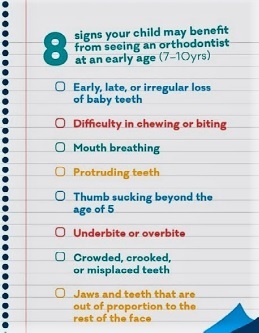
Are you puzzled as to whether your child needs to see an Orthodontist? Our handy Early Years Checklist is here to help.
Early intervention takes advantage of the fact that a child’s jaw is still growing so a treatment plan could include a device called a Palatal Expander to expand the child’s upper dental arch.
Once the arch is the proper size, there’s a better chance that the adult teeth will emerge in a better position.
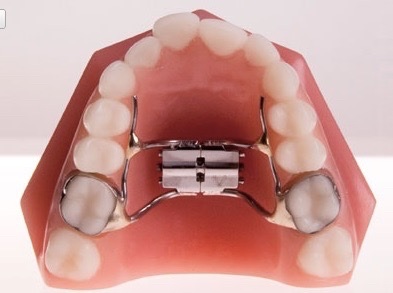
A Palatial Expander
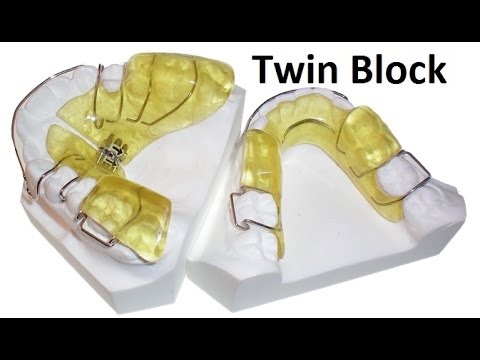
A Twin Block
An early assessment is useful in determining whether your child has any problems with the jaw and teeth early, when they may well be easier to treat.
Earlier treatment can also be financially beneficial to the patient by correcting a potential problem early, rather than allowing the situation to deteriorate.
For some children, early treatment can prevent physical trauma to the protruding front teeth and reduce emotional distress if teasing is occurring.
Also, severely crowded teeth can prevent proper oral hygiene.
There are several ways you can determine whether your child may need early orthodontic treatment. If you observe any of these characteristics or behaviours, you should see an assessment from a Specialist Orthodontist.
If you think your child needs or would benefit from early orthodontic treatment, only a specialist orthodontist has the training, experience and expert knowledge to determine the most appropriate treatment options and the best time to start treatment.
When you see a Specialist Orthodontist, you can be confident that your child is in the best hands.
The Redhead Orthodontics Team are proud to be associated with the following organisations…